Joya: AiR / Inés Quinones / ESP
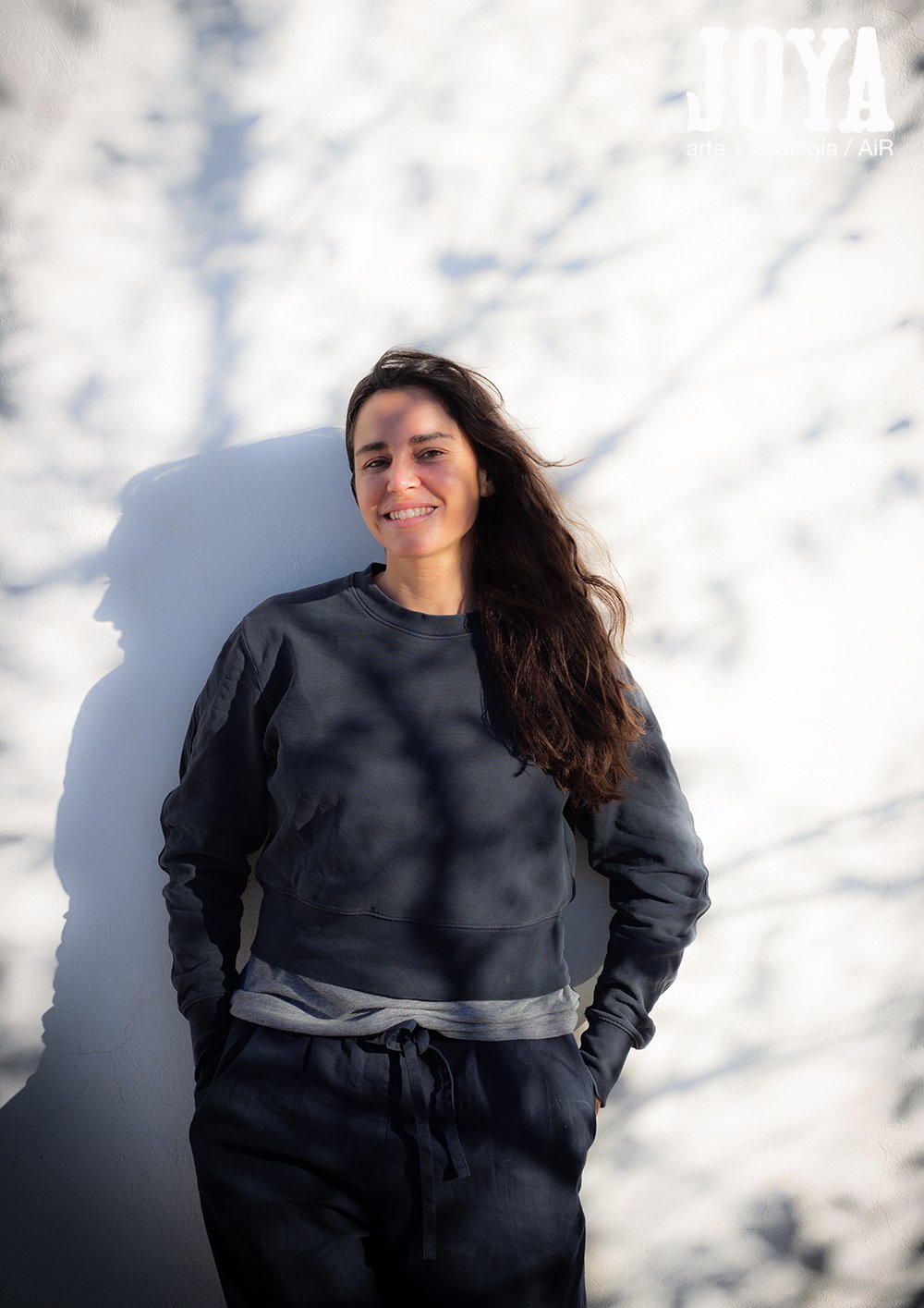
photo Simon Beckmann
Joya: AiR / Inés Quinones / ESP
“I arrived at Joya: AIR without a clear sense of the work I wanted to develop. As a designer and researcher, my practice currently focuses on re-signifying arid landscapes as places of abundance. Therefore, to be not only surrounded, but fully immersed in these majestic landscapes has been the perfect context for continuing my research.
At first, I felt small within the vastness, a bit lost in the silences. The uncomfortableness of being alone maybe, the same one that later felt so soothing . As the days passed, I began to welcome those sensations. They guided me as I approached my material experimentation with esparto grass, an endemic species that thrives in these lands. Coming into the work from a place of humility was exactly what I needed to move forward, and Joya’s unique setting made that shift possible. Time moves differently here; worries and thoughts seem to belong somewhere else. Perhaps they will be gone when I return?
Spending time at Joya: AiR opened me to wonder and re-ignited my creative process with a renewed sense of curiosity. Joya is a living expression of what it means to reveal the abundance held within these lands. Creating abundance from scarcity is not only a poetic gesture but it is an act of quiet rebellion against imposed ideas of what abundance should look like.
I feel deeply aligned with how Simon and Donna have envisioned and nurtured Joya: AiR, and it has been inspiring to witness and inhabit their creation, even for a short while. I am incredibly grateful to them and to this place they have created for us to share and enjoy. Being surrounded by so much creativity and warmth has helped me advance my work in unexpected ways. I began prototyping with esparto grass in an entirely new manner, and I’m truly pleased with the results. My time at Joya has undoubtedly pushed my work forward, and I now return with a clear sense of how I want to develop my project in the future”.
Inés Quinones
Inés is a designer and researcher exploring the intersection of material culture, ecology, and sensory experience. Her practice investigates how endemic plants and local materials can foster regenerative relationships between humans and their territories, claiming that we, designers, should practice using endemic principles. She is the founder of Lab for Endemic Practices, a platform dedicated to designing having place as teacher.
She holds an MA in Regenerative Design from Central Saint Martins, University of the Arts London (2025), where her work "15 Speculative Spoons" examined Stipa tenacissima as a material and metaphor for biocultural resilience. Her research integrates craft, biodesign, and participatory methodologies to reimagine design as a process of attunement with place.
She is currently developing projects in collaboration with Regeneration Academy in Murcia and the University of Almería. Most explicitly, she is leading a biocultural regeneration initiative in the Alto Quípar valley (Murcia, Spain) that involves changing the narratives towards arid landscapes, placing them as spaces of resilience, balance and abundance.