
On this page:
Material Cultures
Sustainable Darkroom
CineLibre
Material Cultures
At Joya: AiR, material cultures describes the ways objects, materials, and physical practices shape social life, knowledge, belief, and power. It asks not only what is made, but how materials act within culture—conditioning labour, memory, and ways of living.
Until the late 1960s, this territory remained largely pre-industrial, long after Spain’s classic industrial period had ended. Before mass emigration, the local economy was shaped by subsistence and low-yield agriculture and by exclusion from the so-called Spanish Miracle—a period of rapid economic growth driven by coastal tourism and urban industrial centres that bypassed the interior uplands.
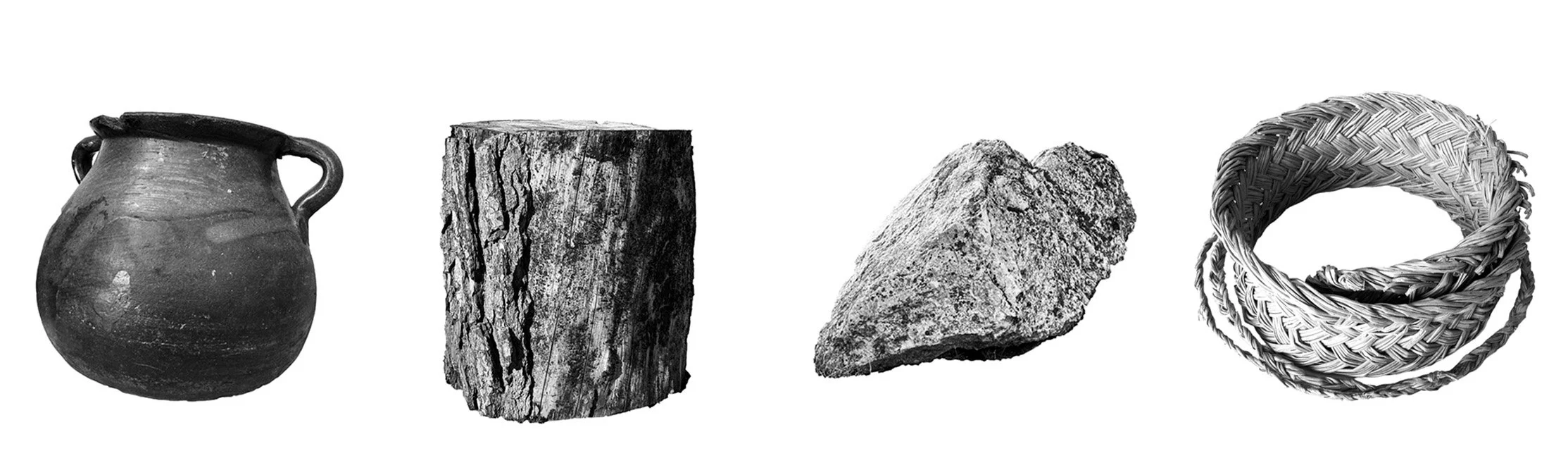
Life here developed through a small and finite set of materials drawn directly from the surrounding landscape:
Clay
Wood
Stone
Esparto grass
These materials structured everyday existence.
Clay formed cooking vessels, roof tiles, bonding agents, and floors.
Wood supported construction, furniture, tools, cooking, and heat.
Stone defined buildings, enclosures, and permanence.
Esparto grass enabled food preparation, farming practices, construction, and furniture—binding labour to landscape.
Material cultures, in this sense, are not decorative or symbolic alone. They are systems of knowledge, embedded in making, maintenance, repair, and use. Materials are not neutral: they resist, endure, weather, and return. Skills are learned through repetition, gesture, and necessity.
Here, material culture can be understood as:
The social and cultural meanings embedded in objects, materials, and physical practices, and the ways these shape human experience across time and place.
Several principles underpin this approach:
Objects carry meaning — tools, structures, and artefacts hold memory, value, and belief.
Materials are active agents — they shape process, scale, and possibility.
Making is cultural knowledge — embodied, situated, and inseparable from landscape.
These are the naturally occurring materials available to residents at Joya: AiR.*
* Esparto grass requires advance organisation, though limited quantities exist in the immediate environment.
Joya: AiR provides the tools necessary to work with and transform these materials.
Artists with specific lines of inquiry are encouraged to discuss requirements prior to residency.
No additional materials are supplied.
Our Adobe Wood Fired Kiln is available during winter months only (see below)
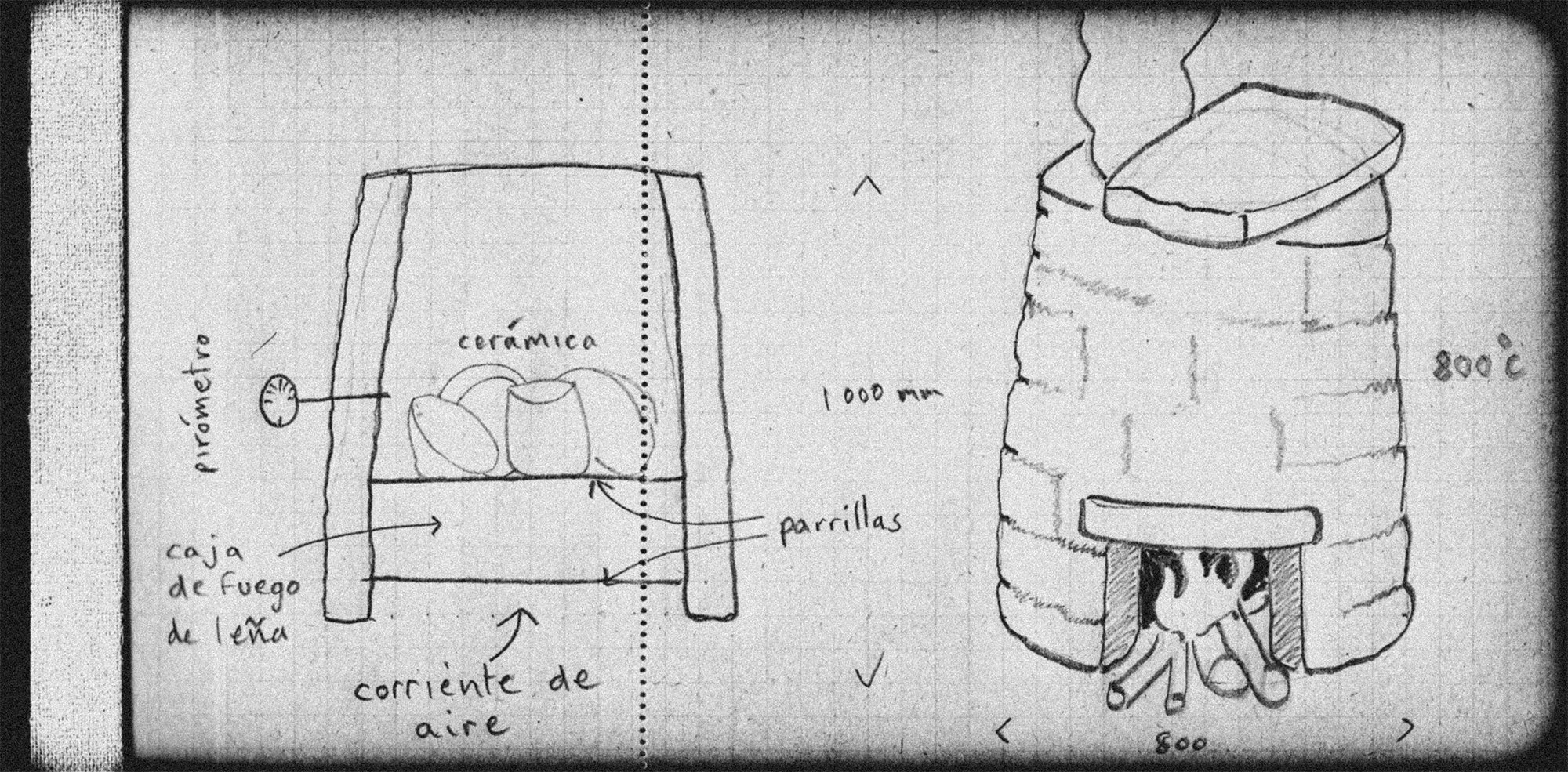
Joya: adobe wood fired kiln

Sustainable Darkroom
environmentally conscious and resource-efficient photographic darkroom designed to minimise ecological impact while encouraging alternative film developing processes
The Joya: AiR sustainable darkroom is an environmentally conscious and resource-efficient photographic darkroom designed to minimise ecological impact while encouraging alternative film developing processes. Traditional darkrooms often involve the use of chemicals and materials that can be harmful to the environment if not handled or disposed of properly. A sustainable darkroom uses environmentally safe processes and encourages the adaptation of safe processes in a contemporary and creative manner.
We do host artists who wish to use conventional analogue photographic techniques and to ameliorate harmful consequences we have a chemical waste management and reclamation system.
It is important to note that the Joya: sustainable darkroom is a facility and does not offer technical support. It is a facility to experiment with alternative processes in an environment that is the embodiment of sustainability.
Here are some typical examples:
Cyanotype
Process: An iron-based process that creates a cyan-blue print by exposing treated paper or fabric to UV light (sunlight).
Sustainability: It uses non-toxic chemicals (ferric ammonium citrate and potassium ferricyanide) and water for development, which makes it more eco-friendly than traditional darkroom methods.
Salt Printing
Process: An early photographic process using a paper coated with salt (sodium chloride) and silver nitrate. After exposure to light, the image is developed in a salt bath.
Sustainability: This is an eco-friendly method because it uses natural salt and can be done without harmful chemical developers.
Anthotype
Process: A plant-based process that involves extracting pigments from fruits, vegetables, or flowers (such as spinach or beetroot) and coating them onto paper. The exposure process uses sunlight to bleach the image onto the paper.
Sustainability: It’s one of the most sustainable processes, as it uses only plant-based pigments, natural light, and no toxic chemicals.
Lumen Printing
Process: A contact printing method where photographic paper is exposed to sunlight, producing a unique print as the paper reacts to the light without any need for chemical developers.
Sustainability: Since this method requires no chemical development, it is a low-impact and environmentally friendly process.
Pinholes and Solargraphy
Process: Using a simple pinhole camera to capture images, or solargraphy to track the sun’s movement over long periods.
Sustainability: This process involves no electrical equipment, and the exposures often take place over several weeks or months using natural light, reducing energy consumption.
Gum Bichromate
Process: A technique where gum arabic, a natural plant resin, is mixed with pigments and photosensitive dichromate to create prints. The image is built up layer by layer.
Sustainability: Although dichromate can be toxic, some variations of this process use safer, modern alternatives. The pigments are often natural, making it somewhat more sustainable when used with care.
Casein Printing
Process: Similar to gum bichromate but using casein (milk protein) instead of gum arabic. The casein is mixed with pigments and dichromate to create a photosensitive solution.
Sustainability: Like gum printing, casein can be done with natural pigments, and the use of milk-based protein makes it more biodegradable.
Coffee or Tea Development
Process: In this method, coffee, tea, or other natural tannins are used as developers for black-and-white film or paper, in place of traditional chemical developers.
Sustainability: This replaces harsh chemicals (like hydroquinone) with natural and biodegradable substances, making it a more eco-friendly option.
CineLibre
a space for expanded cinema, moving image and performance
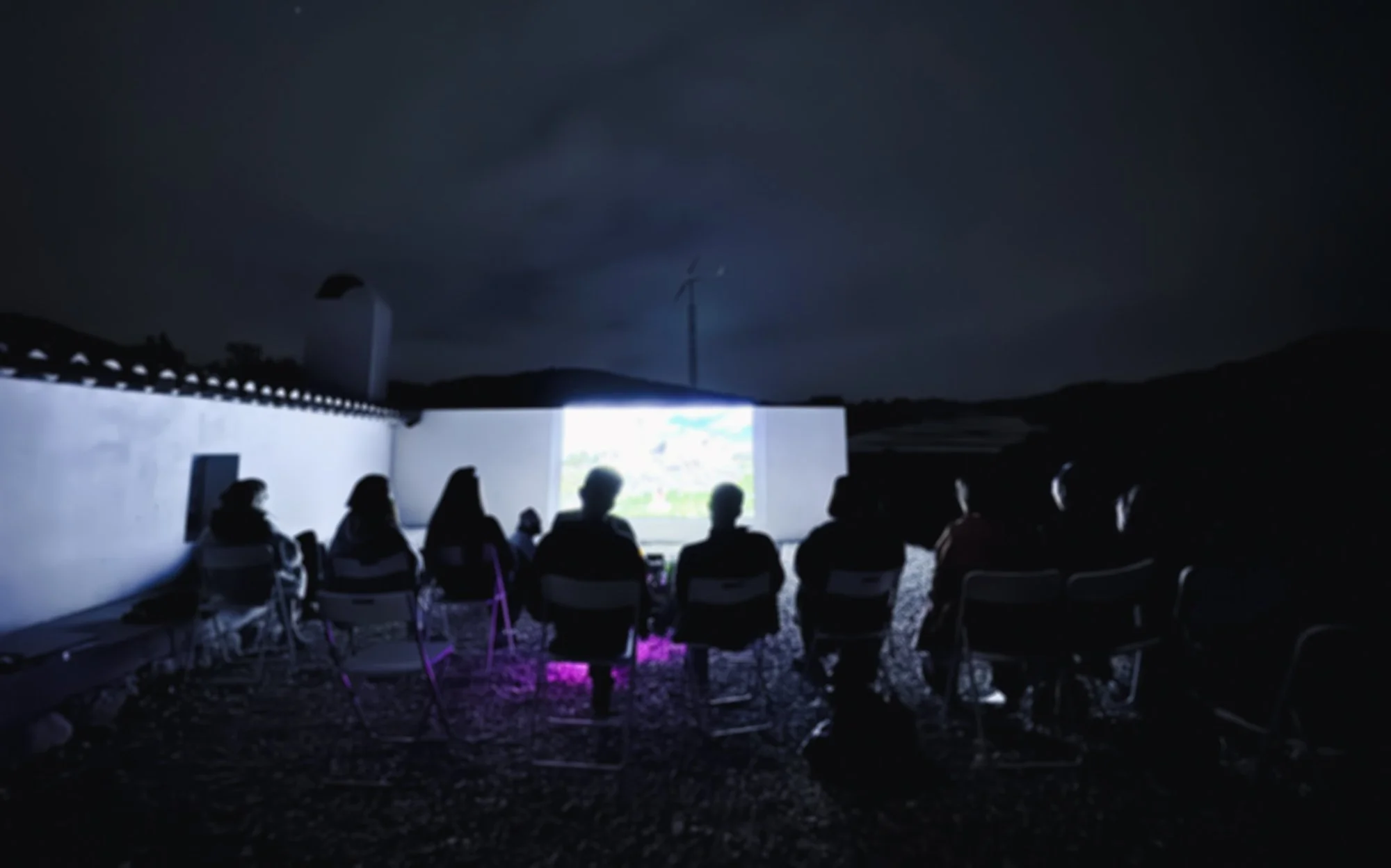
Joya: CineLibre is an open-air space dedicated to expanded cinema, artists’ moving image and live performance. Situated within the landscape of the Parque Natural Sierra María–Los Vélez, it provides a setting where film, sound, performance and installation can be experienced beyond the conventions of the gallery or cinema.
Rather than treating moving image as a fixed, screen-based medium, CineLibre embraces expanded forms of cinematic practice in which projection, sound, landscape, architecture and audience become integral components of the work. The surrounding environment is not merely a backdrop but an active condition of presentation, shaping perception through changing light, weather, acoustics and the physical qualities of the site.
CineLibre also proposes an expanded form of spectatorship. The experience of the work extends beyond the projected image to encompass the conditions of its encounter: the darkness of the night sky, the sounds of insects and nocturnal wildlife, shifting air temperatures, the presence of the surrounding mountains and the architecture of Joya itself. These elements do not simply accompany the work but become part of its reception, inviting audiences to experience moving image as an embodied and situated event rather than a detached act of viewing.
The space supports artists working across moving image, experimental film, expanded cinema, live audiovisual performance, sound art, choreography, spoken word and interdisciplinary practice. It offers opportunities for completed works, performances, research presentations and works in progress, encouraging dialogue between artists, researchers and audiences.
Embedded within Joya: AiR’s wider commitment to ecological thought and place-based research, CineLibre recognises moving image as a means of enquiry as much as representation. It is a place where ideas can be tested publicly, where artistic disciplines intersect, and where cinema extends beyond projection into a shared encounter with landscape.
As with all aspects of Joya: AiR, CineLibre seeks to foster meaningful exchange between contemporary artistic practice and the environmental realities of the site, offering a context in which expanded cinema and performance become forms of ecological observation, cultural reflection and collective experience.
Why work with CineLibre?
CineLibre is intended for artists whose practice extends beyond the conventional conditions of cinema, theatre or the gallery. It offers an environment in which moving image, sound and performance can be developed in direct dialogue with the material and environmental conditions of the site, allowing landscape, darkness, weather and architecture to become active components of the work itself.
Unlike a festival or conventional screening venue, CineLibre is not organised around a fixed programme of public events. It exists to support artistic research whenever a project calls for a public encounter, giving artists the freedom to determine how and when work is shared. Whether developing a new commission, testing a work in progress, presenting a completed project or experimenting with site-responsive forms of projection and performance, artists are encouraged to use CineLibre not simply as a venue, but as a framework for artistic enquiry. The emphasis is on experimentation, critical exchange and the possibility of discovering new relationships between image, sound, audience and place.
As part of Joya: AiR, CineLibre benefits from the extended timescale of residency. Artists have the opportunity to observe, research, make and refine work before sharing it publicly, allowing presentation to emerge from sustained engagement rather than production deadlines. The surrounding community of artists, writers, musicians, curators and researchers further provides a context for discussion, collaboration and interdisciplinary exchange.
For many practitioners, CineLibre offers something increasingly uncommon: the freedom to take creative risks outside the commercial, institutional and festival circuits. It is a place where ideas can be developed, challenged and tested, and where new work can evolve through dialogue with both landscape and audience before entering wider public circulation.
Ultimately, CineLibre asks a simple question: what becomes possible when cinema is no longer confined to the auditorium? By relocating moving image within the environmental, architectural and social conditions of Joya: AiR, it invites artists and audiences alike to reconsider how moving image is made, experienced and understood.
We invite proposals from artists, filmmakers, performers, musicians, writers and researchers interested in exploring the possibilities of expanded cinema within the unique environmental and architectural context of Joya: AiR. Whether presenting completed work or developing new site-responsive projects, CineLibre offers a framework for experimentation, dialogue and public encounter beyond the conventions of the gallery, theatre or cinema.