Joya: new grey water reclamation system / pt. one
Greywater is lightly used household water from showers, baths, hand basins, and washing machines (not toilets). Greywater reclamation captures, treats, and reuses this water—typically for irrigation —reducing mains demand and wastewater discharge.
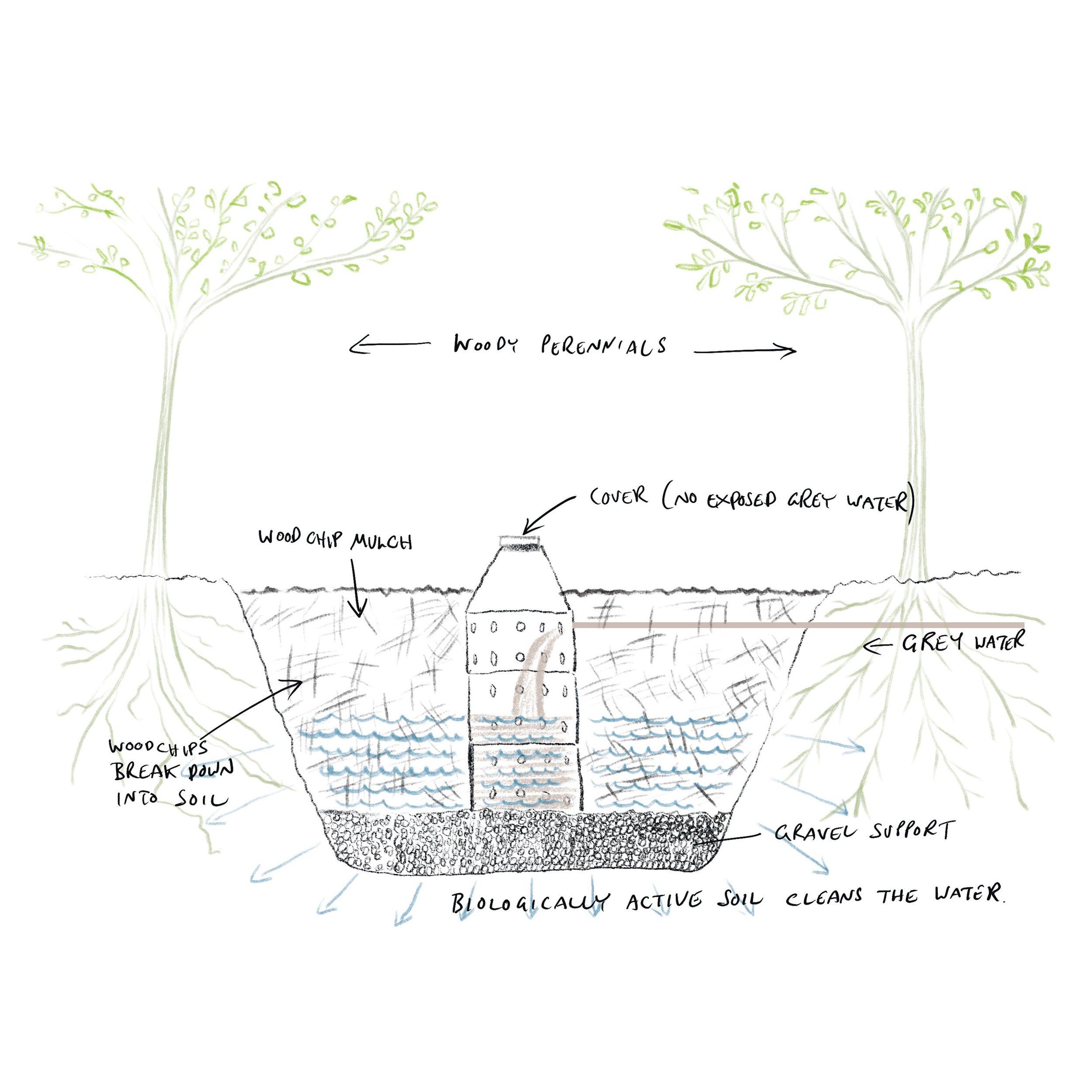
1. Surface layer
Wood chip mulch covers the basin.
Purpose:
Prevents exposed greywater (odour, insects, health risk)
Feeds soil microbes and fungi
Slows evaporation
Over time, the woodchips decompose into soil, increasing organic matter.
2. Infiltration / treatment zone
Greywater enters horizontally (from the right).
Water spreads laterally through:
Woodchip-rich soil
Root zones of woody perennials
This zone is labelled:
“Biologically active soil cleans the water”
Meaning:
Microbes, fungi, and plant roots break down soaps, fats, and organic residues.
This is classic aerobic biofiltration, not mechanical filtration.
3. Central vertical structure
A perforated vertical column (likely a distribution or inspection pipe).
Covered at the top so:
No open greywater
Access for maintenance if needed
Function:
Evenly distributes incoming water
Prevents surface pooling
Allows oxygen exchange (critical for aerobic bacteria)
4. Base layer
Gravel support at the bottom.
Purpose:
Prevents clogging
Ensures even drainage
Acts as a structural and hydraulic buffer
5. Plant integration
Woody perennials planted on either side.
Their roots:
Actively uptake nutrients
Stabilise soil
Extend the treatment zone outward
This turns waste water into productive irrigation.
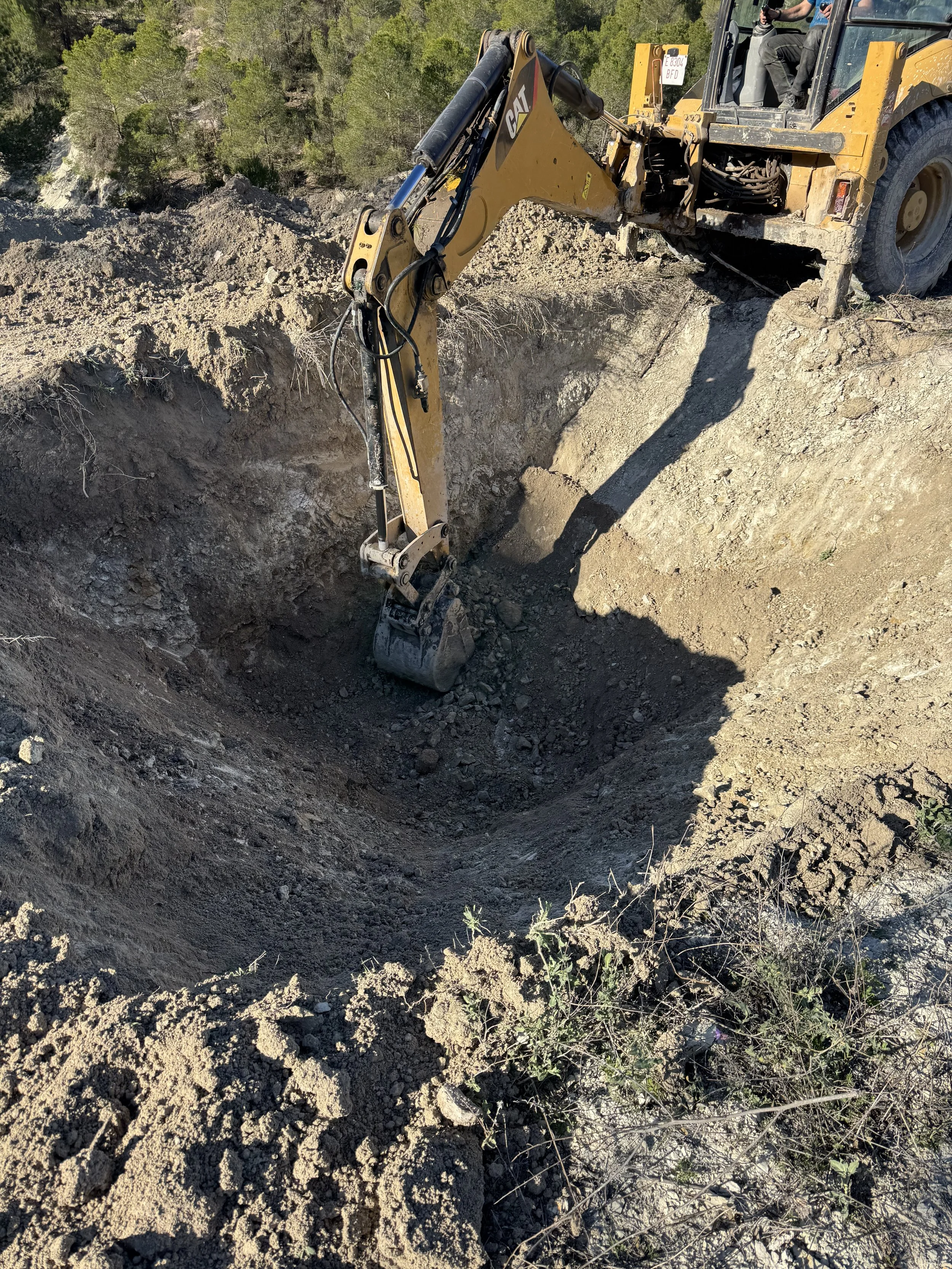
pit excavation:
to a depth of three meters into rocky limestone a marl
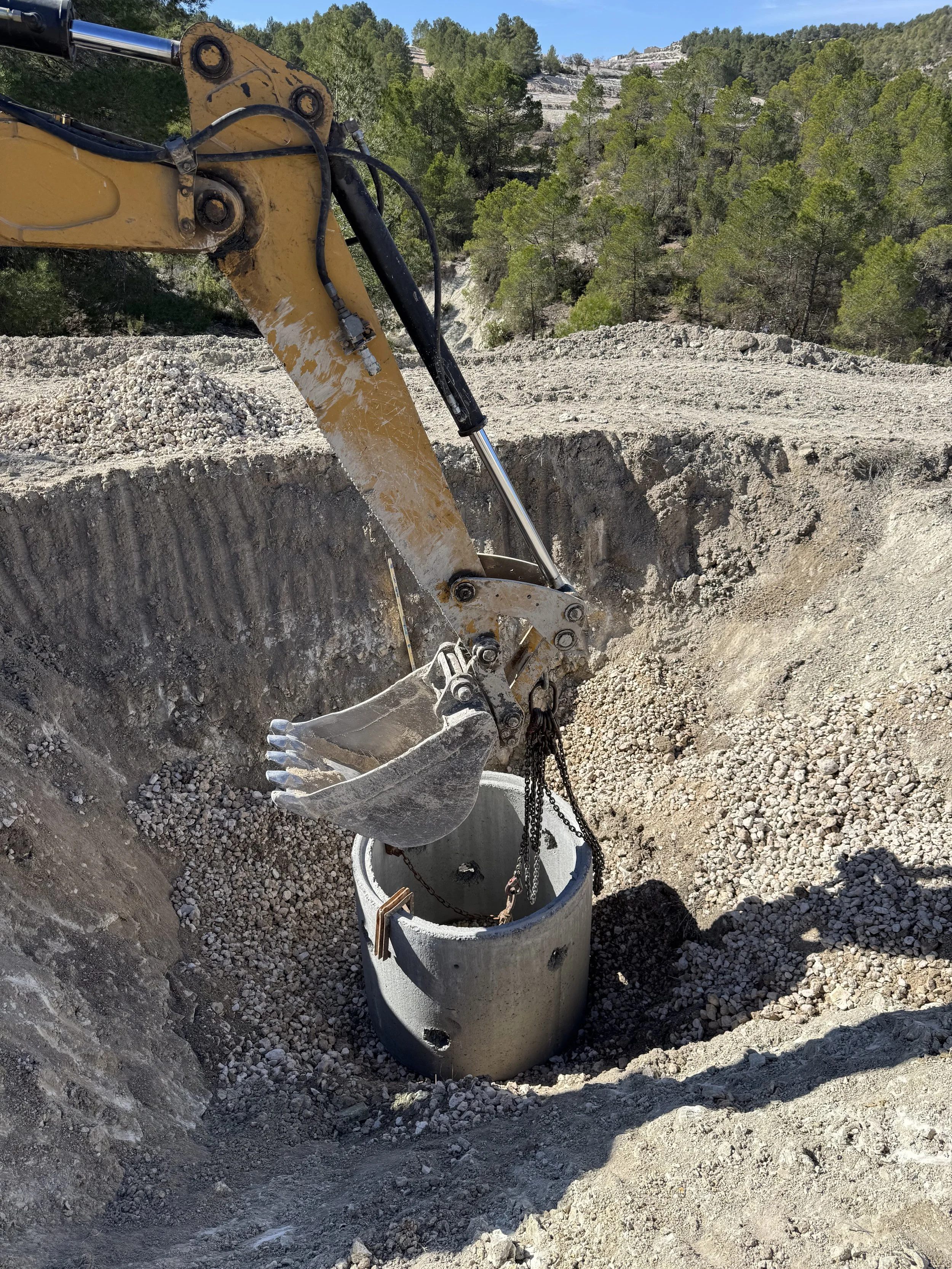
installing the vertical column
this is a perforated concrete tube and collection basin
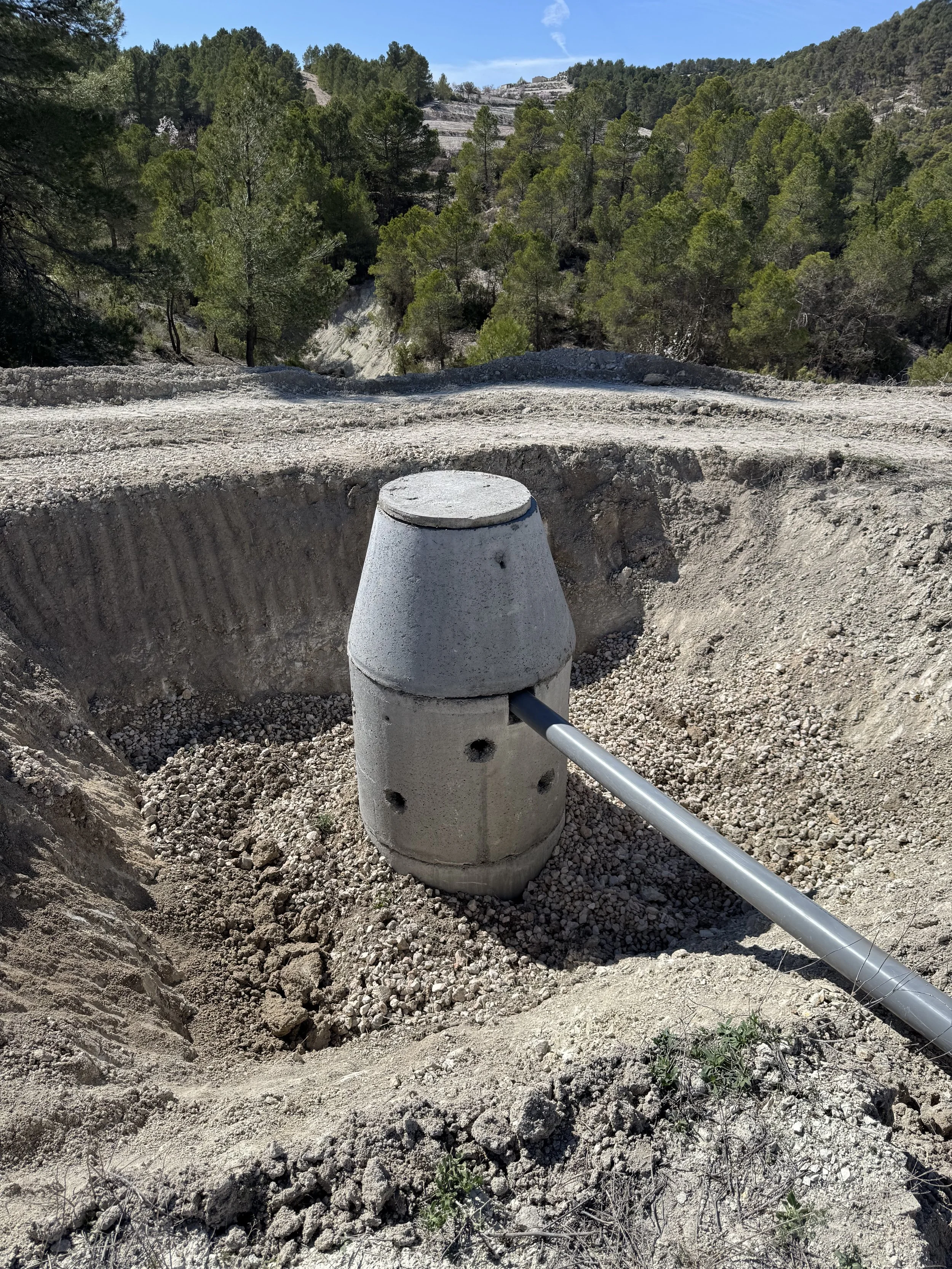
ready for organic material
concrete vertical structure is tapped of with a cone lidded and embedded in gravel. the grey water waste pipe is connected.
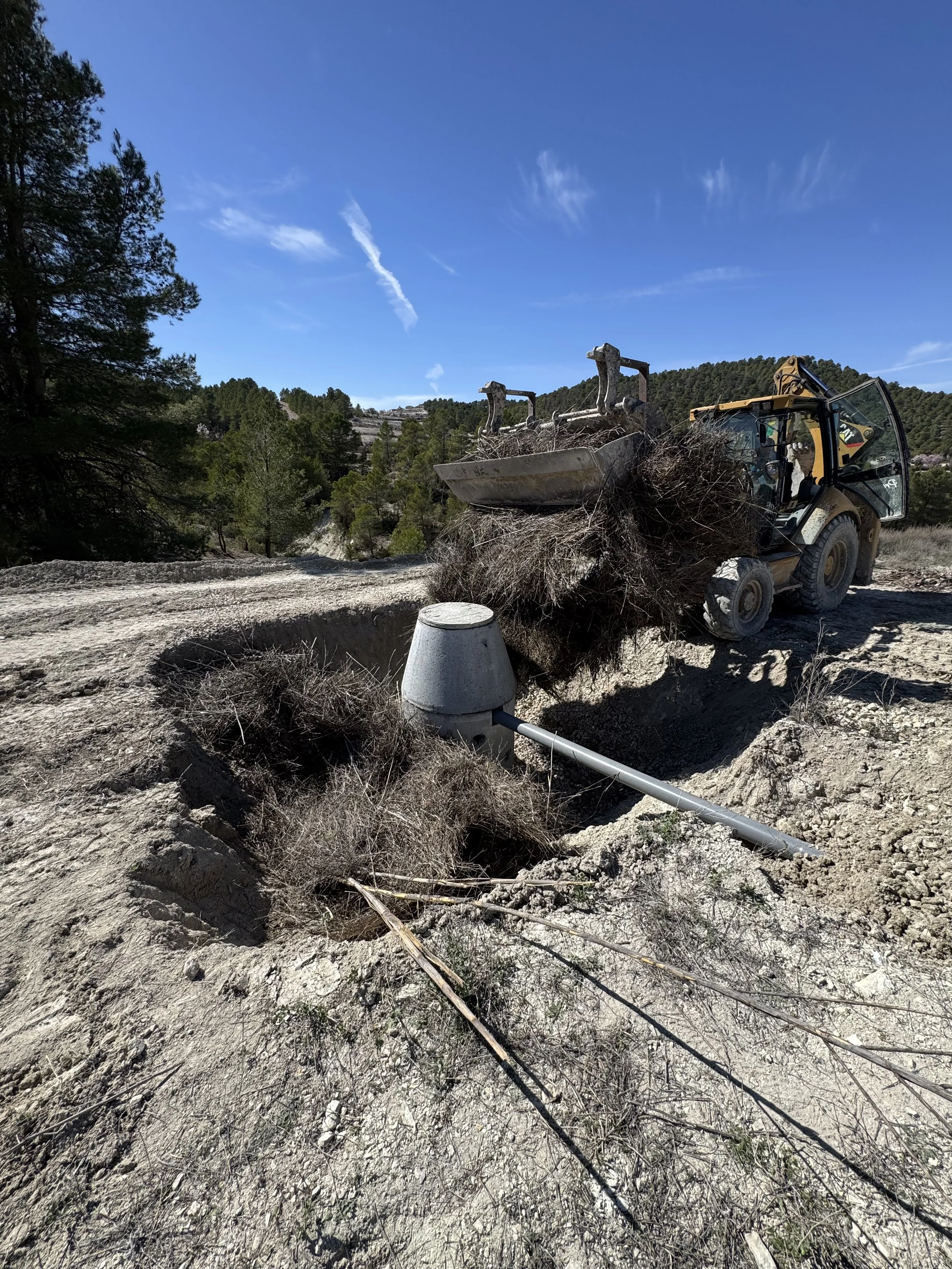
adding organic material
looks untidy at t his stage but needs time to settle in.